Buy Bulk Ammo Online Without Breaking the Bank
When a weekend shooter plans a long range session, they often turn to bulk ammo online to secure hundreds of rounds in a single order, avoiding frequent trips to local stores. This purchasing method lets you select exact calibers and quantities from digital catalogs, with order fulfillment handled by specialized distributors who ship directly to your door. The primary benefit of bulk ammo online is cost efficiency, as per-round pricing drops significantly with larger quantities, while you also gain the convenience of consistent inventory for practice or storage. To use it effectively, simply compare per-case rates across reputable retailers, confirm your preferred grain weight and casing type, and place your order well before your next range date.
What Does Buying Ammunition in Bulk Really Mean for You?
Buying ammunition in bulk online means you’re committing to a single lot number, which gives you consistent ballistics across every round—ideal for zeroing a rifle or matching carry ammo to practice loads. You also lock in a lower per-round cost, but that savings is only real if you actually shoot 5.7x28mm Ammo for Sale through the stock before your needs shift. Store bulk ammo in a dry, temperature-stable place and rotate it using a first-in, first-out system to avoid corrosion or primer degradation over years. Weight and shipping fees can double your effective price, so calculate those before assuming online bulk is cheaper. Familiarity with one batch may breed complacency if your firearm’s timing or your grip changes slightly. Bulk buying means you accept a large upfront footprint of lead, brass, and packaging—ensure it fits your physical storage and range session frequency, not just your wallet.
How Bulk Pricing Works and Where the Savings Come From

Bulk pricing operates on a tiered discount system, where the per-round cost drops as the quantity in your cart increases. Retailers structure these breaks to offset their own fixed expenses—like packaging, handling, and per-order shipping labels—which don’t scale with box count. That fixed cost gets spread across more units, so a 500-round case often costs 10–20% less per cartridge than four separate 125-round boxes. Savings also come from reduced warehouse labor: picking one sealed case is faster than assembling multiple small boxes, and manufacturers pass those logistics savings forward. Additionally, high-volume purchases let online stores buy from distributors at lower wholesale rates, and they share that margin with you to encourage larger, predictable orders. The key insight is that savings come from amortized overhead, not cheaper raw materials, so the price curve flattens after a certain threshold where logistics gains are exhausted.
Understanding Round Counts: What to Expect from Case Orders
When you order bulk ammo online, a “case” isn’t one fixed size—it’s a **standardized round count** that varies by caliber. Typically, pistol cases hold 500 or 1,000 rounds, while rifle cases ship in 200, 500, or 1,000-round increments. Before checkout, confirm the exact number per case, not just the price tag, because a “case” of 5.56 often means 420 rounds in a military-style ammo can. To avoid surprises, follow this sequence: check the product description for the per-case count, divide the total price by that number to get your true cost per round, and then compare that against your planned training or storage needs—never assume a case equals a flat 1,000. This clarity prevents under-ordering for a range day or overpaying for packaging you didn’t need.
Why Per-Round Costs Drop When You Commit to Volume
When you buy bulk ammo online, the per-round cost drops because manufacturers and retailers bake in economies of scale—they’d rather move 1,000 rounds to one customer than 50 rounds to twenty. Shipping, packaging, and handling fees get spread thinner across a single order, and suppliers pass those savings to you as a volume incentive. Plus, bulk lots reduce their inventory turnover costs, so they shave a few cents off each cartridge to lock in your commitment. That’s why a case of 500 often runs 10–20% cheaper 7mm PRC Ammo for Sale per box than buying four boxes separately. It’s simple math: your upfront cash buys lower cost per round because you’re absorbing the logistics burden in one shot.
Q: Why do per-round costs drop when you commit to volume?
A: Because you’re paying for one bulk shipment instead of many small ones—freight, packaging, and labor costs stay flat, so the price per Ammo Cans & Storage for Sale bullet shrinks as the count climbs.

How to Quickly Verify an Online Ammo Seller is Legitimate and Safe
When buying bulk ammo online, start by confirming the seller’s physical address and phone number are listed on their site, then call that number—a live person answering instantly is a strong sign of legitimacy. Cross-check their name with the Better Business Bureau and search for “scam” or “complaint” alongside their domain; legitimate operations won’t have a trail of undelivered orders. Look for a secure checkout (HTTPS) and a clear return/refund policy that explicitly covers damaged or defective ammunition. Finally, use a credit card—never wire transfer or crypto—because chargebacks are your safety net if the bulk order never arrives or is misrepresented.
Spotting Secure Payment Portals and Encryption on Checkout Pages
When buying bulk ammo online, the checkout page is your final security checkpoint. First, confirm the URL begins with HTTPS and displays a padlock icon before entering card details; a missing padlock indicates unencrypted transmission. Then, verify the payment gateway—trusted processors like Stripe or Authorize.net embed their logos or a “Secured by” badge, while a direct bank transfer form without third-party branding is a red flag. Look for the PCI-DSS compliance seal, often in the footer. Finally, check that the entire payment process stays on the site’s domain; if you’re redirected to an unfamiliar URL, abandon the transaction. Encryption strength matters more than the lock icon, since that icon only proves a certificate exists, not that the connection is truly 256-bit AES-secured.

Using Customer Reviews and Third-Party Rating Sites to Gauge Reliability
Before dropping cash on bulk ammo, check what other shooters are saying. Hit the Better Business Bureau, Trustpilot, and Reddit’s r/gundeals or r/ammo—look for **patterns in delivery speed and packaging damage**, not just star counts. A single angry review isn’t a red flag, but repeated complaints about “missing boxes” or “silent support” are dealbreakers. Cross-reference reviews across sites; a seller with glowing testimonials on their own page but 2 stars on third-party platforms is a warning. Also, search the seller’s name in forum archives for long-term reliability chatter.
Q: What’s the fastest way to spot a fake review pattern?
A: Filter for “verified purchase” badges and check if reviewers mention specific calibers or order sizes—generic, vague praise often means paid or bot-generated posts.
Red Flags to Avoid: Vague Contact Info, No Physical Address, and Unrealistic Prices
When buying bulk ammo online, vague contact info, missing physical addresses, and unrealistic prices are the triad of immediate disqualifiers. A legitimate dealer always lists a verifiable street 5.56 Ammo for Sale address (not just a P.O. box) and a working phone number; if only a generic email form exists, treat it as a red flag. Prices that sit 30–50% below every major competitor signal a scam—either counterfeit rounds, stolen goods, or a phishing operation collecting payment without shipping. Cross-check the listed address on mapping services and call the number once. If the line is disconnected or the address points to a residential mailbox, walk away. No deal is worth risking a lost payment or unsafe ammunition.
Choosing the Right Caliber and Grain for Your Bulk Purchase
When buying bulk ammo online, your caliber choice must match the firearm’s stamped specification exactly—nothing else matters for safety or function. For grain weight, prioritize the load your gun was zeroed with or the manufacturer’s recommended range; a 55-grain .223 7.62×39 Ammo for Sale cycles reliably in most AR-15s, while a 62-grain penetrator suits barrier use but may shift impact points. For pistols, stick to standard grain for your platform—115-grain 9mm is a safe baseline, 147-grain subsonic only if you run a suppressor. **Ask: “Should I buy mixed grain in bulk?” No—settle on one grain weight to maintain consistent ballistics and zero.** Drastically different recoil or bullet drop between boxes defeats bulk savings. Check your manual’s twist rate for rifles, as heavy grains need faster twists. Finally, order a single box first, test through your actual barrel, then commit to 500–1,000 rounds of that exact caliber and grain.
Matching Your Firearm’s Specifications to the Right Box Label
When buying bulk ammo online, the box label is your final checkpoint before checkout, and it must mirror your firearm’s stamped specifications precisely. Compare the cartridge designation—such as 9mm Luger versus 9mm NATO—since a higher-pressure NATO round may be unsafe in older pistols not rated for it. Verify the bullet grain weight against your barrel’s twist rate; a 1:7 twist handles 62-grain loads, while a 1:12 twist prefers 55-grain projectiles for stable flight. Also, check the velocity rating on the label against your firearm’s chamber pressure limits. Cross-referencing the label’s dimensions with your barrel’s markings prevents using undersized or oversized rounds, which can cause feeding failures or excessive fouling. Match the exact headstamp, not just caliber name, to ensure dimensional uniformity across your bulk case.

Full Metal Jacket vs. Hollow Point: Which Type Suits Your Purpose
When buying bulk ammo online, your choice between full metal jacket and hollow point hinges entirely on intent. For high-volume range practice, competition drills, or plinking, full metal jacket ammunition delivers reliable feeding, reduced barrel fouling, and lower cost per round, making it the economical workhorse for repetitive training. Conversely, hollow points expand upon impact, transferring maximum energy into soft targets—ideal for self-defense or hunting where over-penetration is a genuine concern. Yet, hollow points often suffer from feed issues in certain firearms, so test a small batch before committing to a case. If your purpose is merely burning through rounds to refine marksmanship, FMJ suffices; if you need stopping power with ethical terminal performance, prioritize hollow points despite their premium price.
How Grain Weight Affects Recoil, Accuracy, and Performance
When buying bulk ammo online, grain weight directly dictates the shooting experience by altering the balance between recoil, accuracy, and performance. Heavier projectiles, such as 147–150 grain 9mm, produce more felt recoil due to higher momentum, which can slow follow-up shots but often deliver superior accuracy at longer ranges because they resist wind drift better. Lighter grains, like 115 7.62×51 Ammo for Sale grain, cycle faster with snappier but less punishing recoil, making them ideal for rapid fire and competitive drills. Match your grain to your firearm’s barrel twist rate; a mismatched load degrades precision. For defensive carry, heavier grains offer deeper penetration, while lighter loads yield flatter trajectories. The optimal grain for bulk ammo online balances recoil management against terminal performance for your specific intended use.
Heavier grains increase recoil and long-range stability; lighter grains reduce kick and enhance speed—choose based on your accuracy and recoil tolerance.
Maximizing Shipping Costs and Delivery Time on Large Orders
For bulk ammo online, shipping costs scale non-linearly with weight, so splitting a large order into multiple smaller boxes often triggers lower per-pound rates than one oversized crate. Compare flat-rate shipping tiers across retailers, as some cap heavy packages at a fixed price, while others calculate dimensional weight—making compact, dense packaging essential. To minimize delivery time on large orders, choose carriers with regional hubs near your ZIP code, and schedule delivery for mid-week to avoid weekend processing delays. Real-time inventory tracking prevents split shipments, where partial dispatches incur duplicate handling fees. Always verify whether free shipping thresholds apply before or after tax, and consolidate all calibers into a single transaction to avoid repetitive base charges. Ordering early in the week and selecting expedited ground over standard air often yields faster arrival without excessive surcharges.
Why Heavy Parcels Have Higher Fees and How to Offset Them
Heavy parcels incur higher fees because carriers price by dimensional weight and absolute weight, and ammunition’s density pushes both metrics upward. For bulk ammo, the cost per pound compounds with distance, so a 50-pound case may cost double a 25-pound one, not just proportionally. To offset this, consolidate your order into fewer, larger boxes to reduce per-package handling charges. Optimize your shipping weight threshold by splitting orders only when free-shipping tiers kick in—sometimes two 30-pound 7.62x54R Ammo for Sale parcels cost less than one 60-pound parcel if the carrier applies a surcharge above 50 pounds. Also, choose slower ground transit, which discounts heavier freight. Finally, pre-purchase shipping labels through your ammo retailer’s bulk program, as these often lock in flat per-pound rates, bypassing unexpected residential or fuel surcharges.
Taking Advantage of Free Shipping Thresholds on Retailer Sites
When you’re stacking bulk ammo online, free shipping thresholds on retailer sites are pure gold—they turn a big purchase into a smarter one. First, compare the per-case weight against the threshold; ammo crates vary wildly, so a 500-round box of 9mm might cross the line while a same-priced .223 case won’t. Then, add low-weight filler like cleaning patches or a single box of defensive rounds to push past the cutoff without bloating your cart. Finally, check if the store counts ammo toward the threshold or excludes it—some do, some don’t, and that changes your math. A quick pre-check of shipping fees vs. filler cost keeps you ahead.
Estimating Arrival Windows: When Should You Place a Restock Order?
To avoid a gap in your shooting schedule, calculate your restock order trigger point by adding the vendor’s current processing time to the transit days shown at checkout, then subtract two days for weather delays. Place the order when your remaining ammo covers exactly that sum plus one .17 HMR Ammo for Sale week of average use. For backordered calibers, double the displayed lead time before dropping the order, since stock often arrives in waves. Monitor the tracking page daily—if the package stalls for 48 hours, expedite a second order only if your reserve drops below 20% of your monthly need. Otherwise, wait the original window out.
Restock when your reserve equals transit time plus processing time plus seven days of typical consumption—never wait for a low-stock alert, as that often misjudges shipping variability.
Storing a Large Ammunition Supply Safely at Home
Ordering bulk ammo online delivers serious savings, but that pallet on your doorstep demands a dedicated storage strategy. Before checkout, plan for a cool, dry, and locked environment—ideally a steel cabinet or ammo can with a desiccant pack. Never store rounds loose; keep them in their original factory boxes inside your container to prevent primer impact and simplify inventory. Rotate your stock, using the oldest ammunition first to avoid corrosion or powder degradation over years. For storing a large ammunition supply safely at home, separate your stash by caliber and lot number, and place heavy crates on lower shelving to prevent structural strain. Finally, conduct a monthly humidity check—your bulk investment stays ballistic and reliable only when the environment remains stable and secure.
Temperature, Humidity, and Container Choices for Long-Term Freshness
For ammunition purchased in bulk, longevity hinges on strict environmental control. Temperatures above 120°F accelerate propellant degradation, while humidity above 50% invites corrosion on brass and primers, so store crates in a climate-stable zone away from attics or exterior walls. **Optimal humidity stays between 30% and 40%**, monitored with .17 WSM Ammo for Sale a hygrometer and managed via silica gel desiccants, which require periodic recharging. Choose airtight, military-grade .50-caliber cans with rubber gaskets, or heavy-duty polyethylene boxes, over original cardboard, which wicks moisture. Before sealing, add a desiccant pack per container and avoid foam padding that traps condensation.
Q: How often should desiccant packs be checked for humidity control? A: Inspect monthly; if the humidity indicator card exceeds 40%, replace or oven-dry the packs at 200°F for two hours, then reseal the ammo immediately.
Rotation Methods to Use the Oldest Rounds First
When your bulk ammo order arrives, stack new cases behind existing inventory so the oldest rounds first always sit at the front of your shelf. Use a simple “first-in, first-out” (FIFO) system: write the purchase date on each box with a permanent marker, then rotate by physically moving older boxes to a labeled “use-now” bin. For loose rounds in ammo cans, add a divider and refill from the back, pulling from the front. Check your rotation every three months, especially if you shoot regularly, to prevent seal degradation or primer fatigue from static storage.
Q: What is the fastest way to identify which rounds to shoot first? A: Color-code your ammo cans—red tape for older batches, green for new—so you grab the red can without reading labels.
Keeping Your Stock Secure and Organized in Ammo Cans and Shelving
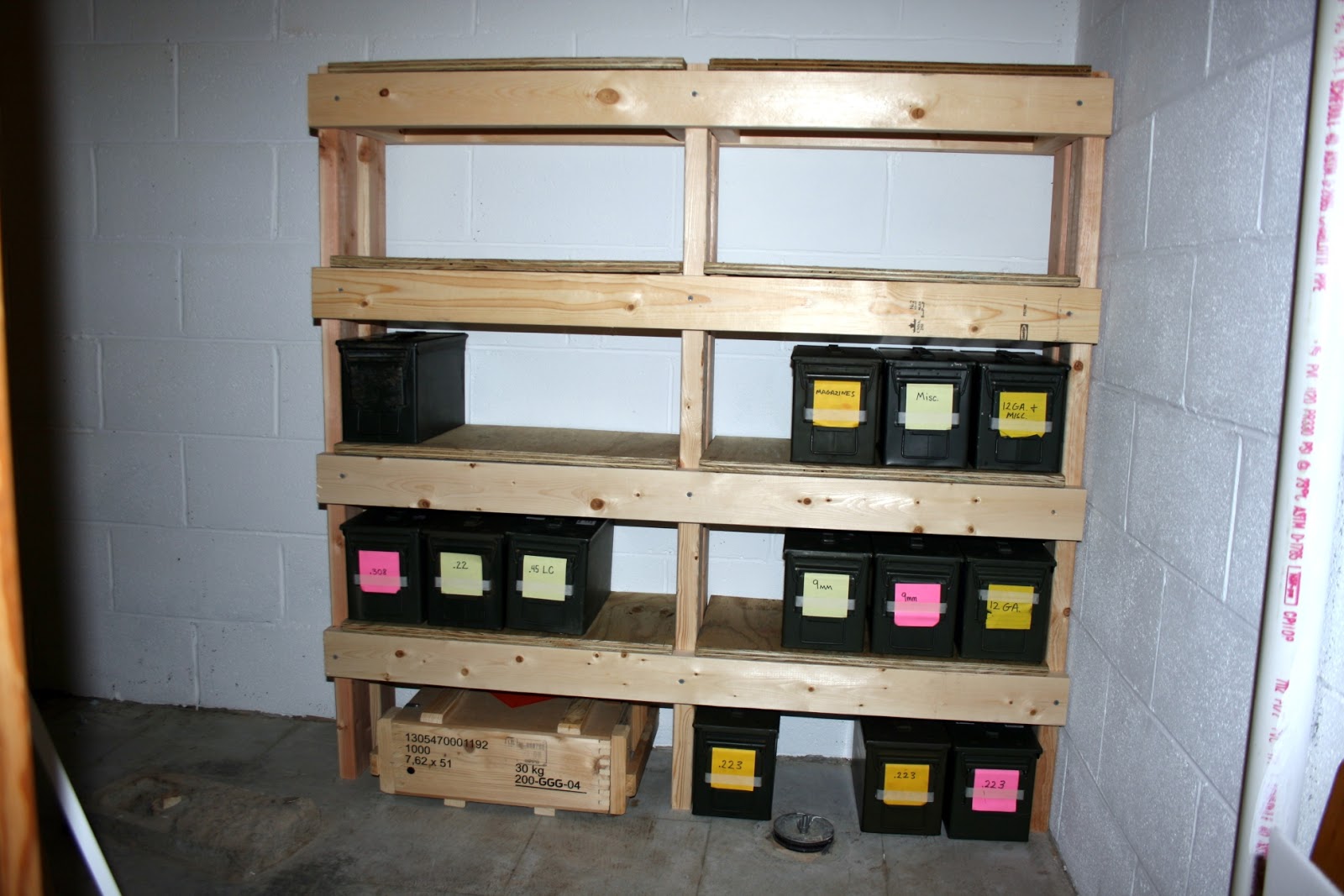
Once your bulk ammo online order arrives, immediately transfer rounds from flimsy cardboard into dedicated ammo cans for bulk storage to create a sealed, moisture-resistant barrier. Sort cans by caliber, grain weight, and lot number, then label each lid with a permanent marker or adhesive tag to prevent cross-contamination during range prep. Place heavier cans on lower steel shelving units to maintain a low center of gravity, and store polymer or metal cans off concrete floors using pallets or rubber mats to deter rust and corrosion. Stack cans no more than two high on sturdy, bolted shelving to prevent collapse and allow easy access without shifting heavy loads.
- Use silica gel desiccant packs inside each can to control residual humidity and protect primers.
- Date every can when filled so you can rotate older stock first and track shelf life.
- Position shelving away from exterior walls to avoid temperature specialty sports & supply swings and condensation buildup.